Badger Tracks and Signs: A Seasonal Identification Guide
Badgers are creatures of habit and darkness, and most of us never see one. What we see is what they leave behind: a trail worn smooth through long grass, a shallow pit scraped at the edge of a path, a bundle of bedding dragged into an entrance and not quite cleared away. Learn to read those marks and a night-time territory starts to open up in daylight. The signs do not stay the same all year, though. What is obvious in January can be almost invisible by August, and the things worth looking for change as the ground, the weather and the badgers' appetites change with them.
Start With the Paths, Not the Setts
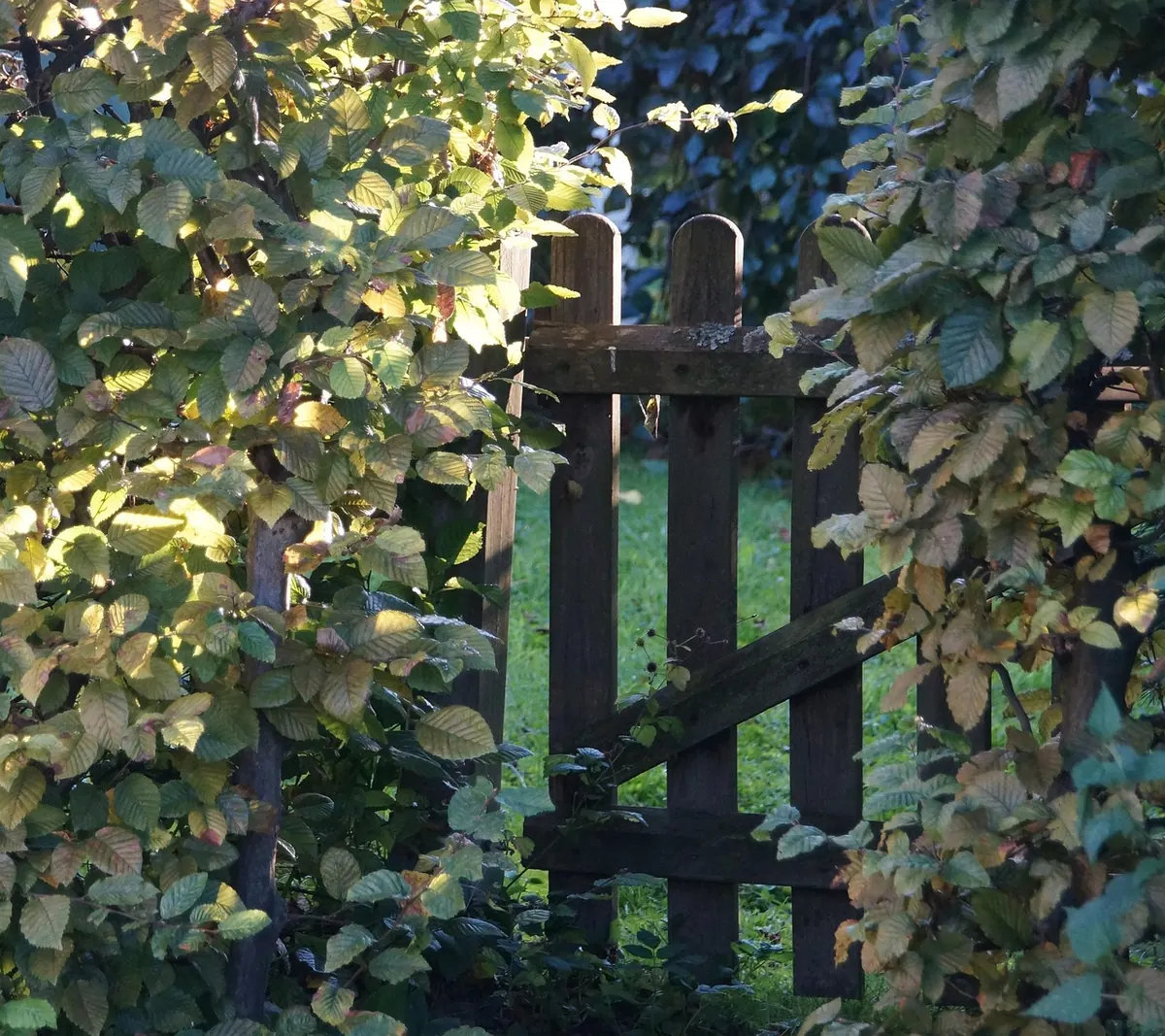
Before hunting for footprints, find the runs. A badger clan uses the same routes night after night, and those routes become unmistakable: flattened tunnels through grass, dark worn lines in leaf litter, narrow gaps worn under fences and through hedge roots. Follow a run uphill through woodland and it will often take you towards a sett. Follow it the other way and it usually leads to feeding ground — pasture, orchard, a lawn, a hedge bottom full of worms.
Look for the details that confirm it. Hair caught on barbed wire or the wire strands of a fence. A low point in the run where mud has held a print. Spoil or loose soil kicked along the edge of the path. Runs often cross one another and converge near the sett, so a junction of worn tracks in a hedge line is a good place to slow down and look properly.
Footprints: What the Ground Will and Won't Show
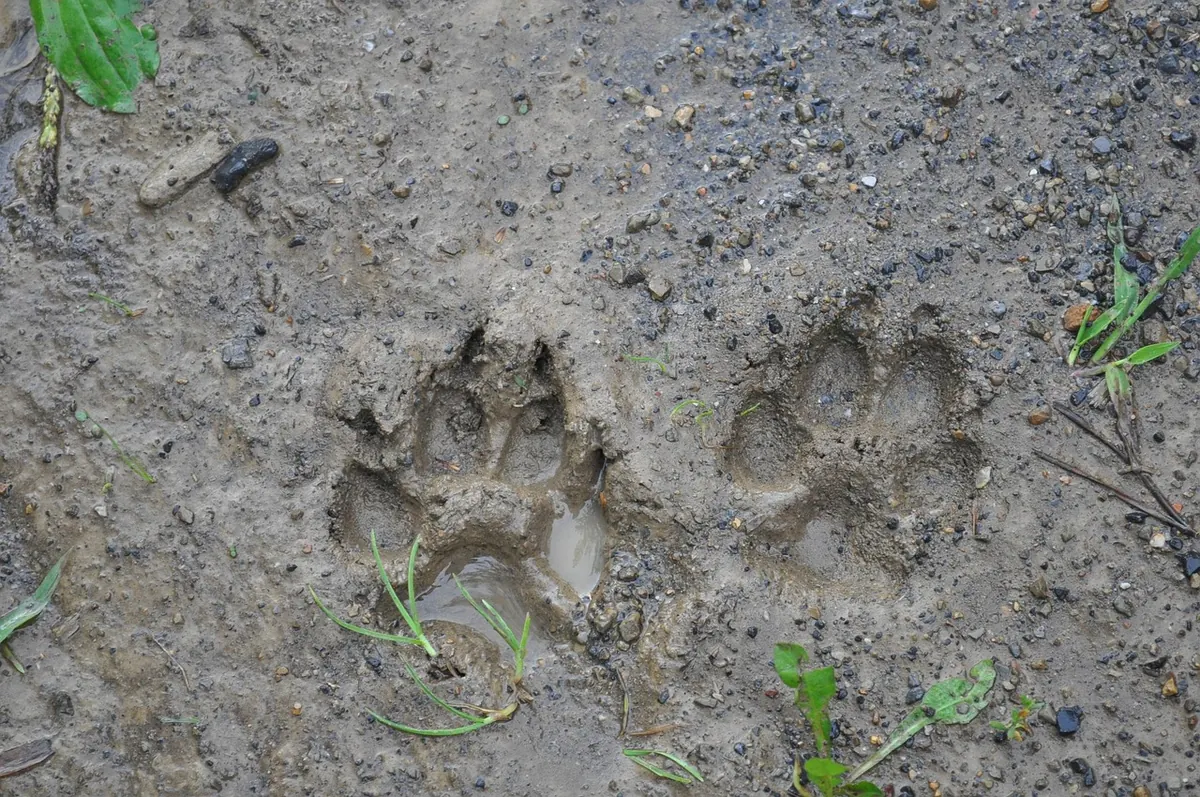
A clear badger print is broad and hard to confuse once you have seen a few. There are five toes arranged in a wide arc in front of a large, kidney-shaped pad, and usually five long claw marks ahead of them — the front claws are long and blunt-tipped from a lifetime of digging. The front foot leaves the wider print, often around 6–8cm across including the claws; the hind foot is narrower and longer, and the hind claws often fail to register at all. Badgers walk slightly pigeon-toed, feet angled inwards, so a line of prints tends to point in towards its own centre.
Telling Badger Prints From Fox, Dog and Rabbit
Fox prints are narrower and more slender, with a smaller pad and claws that show far less often. Small dog prints can look similar at a glance, but the pad shape differs, and the toes are usually tighter together. Rabbit and hare prints show four toes on the front foot and a densely furred sole, so the pad hardly registers at all. If you can see five toes, a broad pad and long claws together, you are almost certainly looking at a badger.
The Seasonal Print Calendar
Winter and early spring are the print-maker's season. Saturated soil, frost-heaved mud and snow all hold detail, and tracks in snow can be almost perfect. Through spring, wet ground around sett entrances means prints are everywhere. High summer is the difficult one: baked ground keeps nothing, so switch your attention to dust, dew-darkened grass at first light, mud at the margins of drying puddles, and the loose soil of spoil heaps. Once autumn rain returns, the runs start recording again.
Latrines: The Boundary Markers
A latrine is the most reliable sign that badgers are using an area, and it is usually the first thing a newcomer learns to spot. It is a small scrape or shallow pit, sometimes a series of them, holding dark dung that often shows undigested remains: shiny beetle cases, seed husks, fruit stones, fragments of insect. Fresh droppings are glossy and slimy; older ones dry out and go dull.
Latrines are placed where they will be noticed — on paths, at field corners, beside gateposts, along a hedgerow, on a tussock or a flat stone. They are used throughout the year, but they are most obvious from late winter into spring, when boundaries are being re-marked and activity around the sett picks up.
Scratching Posts and Scent Marks
Badgers have a scent gland under the tail and use it constantly, but they also scratch. Fence posts, tree stumps, gateposts and exposed roots all get worked over, and the marks cluster at a fairly consistent height. Look for smoothed, polished wood, parallel claw gouges, and sometimes a few coarse grey hairs caught in the grain or on nearby vegetation. Scratching posts tend to sit on or beside a run, often close to a latrine, which makes a pair of them a strong indication that a clan is regularly passing through.
Setts and Bedding: Signs of a Working Home
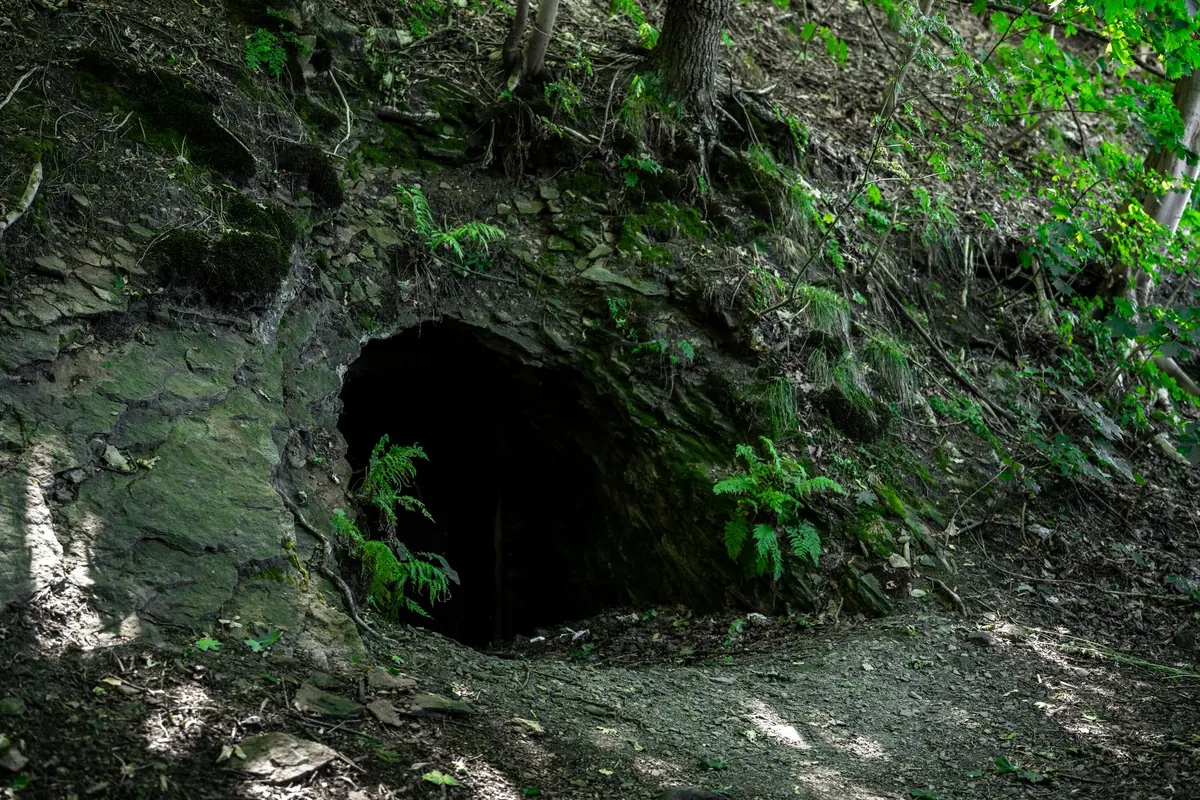
An active sett entrance is usually an oval or arch-shaped hole, wider than it is tall, with spoil dug out and spread in a fan below it and a lip worn smooth by the friction of animals passing. Rabbit holes are smaller and rounder; fox earths often have bones and feathers scattered around them.
Bedding is the strongest evidence of occupation. Badgers drag in dry grass, bracken and leaves, and on dry mornings they sometimes haul old bedding out to air, leaving bundles at the entrance or green-stained vegetation just outside. Most fresh excavation happens in autumn and winter, when setts are extended and refurbished. By summer the spoil has weathered and greened over, so new digging is much harder to spot.
Foraging Signs: Snuffle Holes and Torn Turf
Where badgers have been feeding, the ground is often left pockmarked. Snuffle holes are shallow conical pits, usually a few centimetres deep, pushed into the soil by a snout searching for earthworms, leatherjackets and beetle larvae. In summer and autumn, look for patches of turf torn apart and scattered fragments of wasp nest — badgers dig out wasp nests for the grubs inside and leave a crater plus shreds of papery comb. Late summer dung often contains fruit stones and cherry pips, a sign of feeding before winter.
A Season-by-Season Checklist
- Winter (December–February): prints at their best in frost, snow and saturated mud. Check runs, ditch edges and the low points of paths. Fresh digging often shows at sett entrances; latrines remain active.
- Spring (March–May): wet ground makes footprints easy to find. Latrine use is at its most obvious as boundaries are re-marked. Bedding collecting increases, and cubs may start appearing at entrances from April.
- Summer (June–August): hard, dry ground hides prints. Switch to dust, dew, puddle margins and loose spoil heaps. Snuffle holes and dug-out wasp nests become the giveaway.
- Autumn (September–November): rain returns and prints reappear. Foraging sign is everywhere — torn turf, digging under hedgerows, fruit stones in dung. Bedding gathering picks up before winter.
Recording It Well — and Leaving It Alone
Take a photograph with something for scale, note the date, the weather, the ground conditions and a grid reference, and build a record over the year rather than judging anything on a single visit. Signs come and go; a run that looks abandoned in August can be busy again in November.
Keep to existing paths, never block, enlarge or dig into a sett entrance, and avoid standing around a sett at dusk with a torch. Badgers and their setts are protected in the UK, and disturbing a sett — including obstructing entrances or carrying out nearby work — can be an offence. If any work is planned near a sett, take proper advice from the relevant statutory body before anything starts. Watching from a distance, quietly and briefly, is always the better way to see more.
Photo: faery_dustgirl0 / Pixabay

You Might Also Like
A practical, humane guide to fencing, gates, buried mesh and non-harmful deterrents that protect your garden boundary while respecting protected badgers.
Most badger cubs found alone are not orphaned. Here is how to tell when a cub genuinely needs help, why you should not handle it, and who to call.