Comparing Badger Setts, Fox Earths and Rabbit Warrens
A hole in a hedge bank can stop a walk. It might be a badger sett, a fox earth, or a rabbit warren. From a distance they can blur into the same dark opening. The differences are in the details: how the entrance is shaped, where the soil has been thrown, what the air smells like, and how the surrounding ground is worn. Read those clues together and you can usually make a confident call — while keeping your distance.
Look at the cluster, not just the hole
Start by stepping back. Badgers are social animals, so a sett is often a collection of entrances, some large and active, others smaller and partly filled. You may see ten holes along a bank, linked by broad, smooth paths. Foxes tend to use one or two entrances, often opportunistically: under a tree root, in a railway embankment, beneath a shed, or in an old badger sett. Rabbits live in colonies, so a warren is usually a scatter of smaller holes, often in sandy soil or short grass, with narrow runs threading between them.
A single large hole with fresh soil is a strong hint of badger. A single neat hole in dense cover could be fox. A dozen small holes in a sunny bank is almost certainly rabbits.
Entrance shape and size
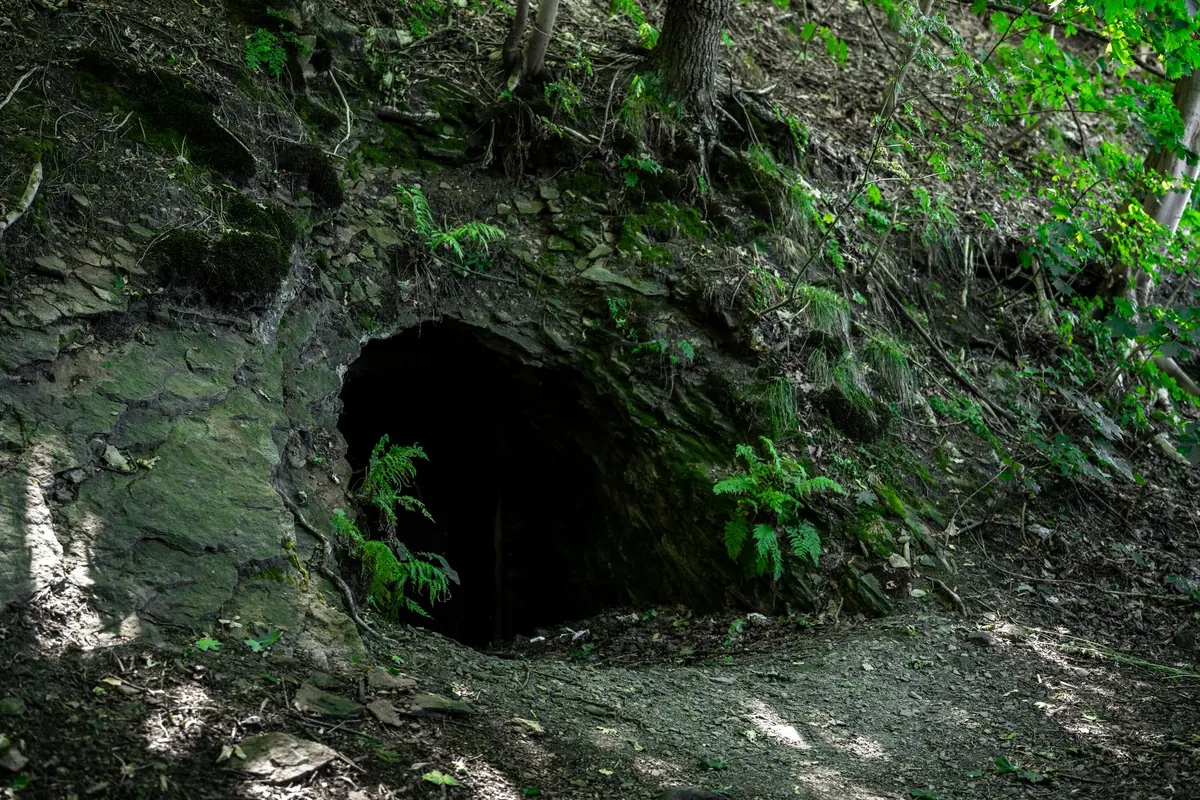
Badger entrances are broad and arched. They often look wider than they are tall, with a rounded roof and a floor worn smooth by generations of badgers. The lip may be compacted and clean, and the tunnel usually slopes gently before dipping down. Fox earths are usually rounder and a little more irregular. They can be similar in size to a badger hole, but often feel narrower and less engineered. Rabbit burrows are much smaller and neater: circular or slightly oval, often with scratch marks around the edge and loose soil below.
In hard rock or chalk, all three may look different from the textbook. Use size relative to the other holes around it, not an exact measurement.
Quick shape guide
- Badger: broad arch, often wider than tall, smooth worn floor, usually part of a group.
- Fox: rounder, sometimes irregular, often under roots or rocks, usually one or two entrances.
- Rabbit: small and circular, often many together, with scratched edges and nearby droppings.
Spoil, digging and bedding
The soil around the entrance is often more revealing than the hole itself. Badgers are powerful diggers. They throw out substantial spoil heaps — fans of fresh earth, sometimes with stones, roots and clods. You may also find old bedding dragged out: dry grass, bracken, leaves or moss. Near active setts, look for scratching posts, trees or fence posts worn smooth by badgers marking their territory.
Foxes dig too, but their spoil is usually smaller and less tidy. It may be mixed with prey remains: feathers, bones, fur, or the remains of a rabbit. Foxes often leave scats on top of the spoil or on nearby stones and logs. Rabbit spoil is smaller again: fine sandy scrapes, often with round droppings nearby. Rabbits also create latrines — small piles of droppings at the edge of the warren.
Smell and other sensory clues
Smell is useful, especially after rain. A badger sett has an earthy, musky scent, strongest near latrine pits. These are shallow scrapes used repeatedly, often along paths or at territory edges. The smell is not usually overpowering, but it is distinctive once you know it. Fox earths can carry a sharp, pungent, almost ammoniacal smell. Fox scat is often twisted and left on raised objects. Rabbit warrens smell faintly of urine and dry vegetation; fresh droppings are round, dry and obvious.
Listen too. At dusk, badgers may be heard shuffling and snuffling. Foxes may scream or bark. Rabbits thump a warning. None of these are guaranteed, but they add to the picture.
Surrounding habitat and paths
Badgers favour woodland edges, hedgerows, copses and banks with well-drained soil. Their paths are broad and well worn, often linking the sett to fields, latrines and feeding areas. These “badger highways” can look like small animal motorways, with clear runnels through grass. Foxes are more adaptable. They use farmland, woodland, urban gardens, allotments and railway land; their trails are less regular, and they often follow human paths or fences. Rabbits need short, grazed vegetation and safe digging. They thrive in sandy soil, grassland, dunes, hedgerows and the edges of woods, where they can see danger coming.
An old badger sett may be taken over by foxes, and rabbits may burrow into the spoil. So a mixed site is possible. Treat the largest, most worn entrances as the primary clue.
A field checklist to carry in your head
- Count the entrances and note how they are grouped.
- Check the shape: broad arch, rounder fox hole, small rabbit hole.
- Look at the spoil: large fans and bedding, scattered fox diggings, or small sand piles.
- Use your nose: musky earth, sharp fox, faint rabbit.
- Read the paths: broad badger highways, narrow rabbit runs, irregular fox trails.
- Look for signs: badger latrines and scratching posts; fox feathers, bones and scat; rabbit droppings and latrines.
- Consider the setting: hedge bank and woodland for badger, opportunistic cover for fox, open sandy grassland for rabbit.
Watching and recording without causing harm
Once you have a likely identification, stay back. Use binoculars from a path or a safe vantage point, and avoid blocking entrances or standing on spoil. Keep dogs on a lead near setts and warrens. Badger setts are protected, and disturbing them can cause real harm, especially during breeding and winter. If you are unsure, treat a hole as a badger sett and give it space.
For conservation, record what you see: date, grid reference, entrance count, signs, and whether the site looks active. Pass records to your local wildlife trust, badger group or county recorder. Avoid publishing exact locations of active setts online; persecution and disturbance are still risks. If a site is threatened by development or digging, contact a licensed ecologist or your local badger group for advice rather than intervening yourself.
With a little practice, the differences become obvious: the badger’s broad arch and heavy spoil, the fox’s scruffy opportunism, the rabbit’s busy city of small holes. Keep your distance, leave the site as you found it, and the next hole in the bank will tell you more than you expected.
Photo: Michał Robak / Pexels

You Might Also Like
A practical, humane guide to fencing, gates, buried mesh and non-harmful deterrents that protect your garden boundary while respecting protected badgers.
Most badger cubs found alone are not orphaned. Here is how to tell when a cub genuinely needs help, why you should not handle it, and who to call.