What to Do If You Find a Badger Cub Alone: A Rescue Explainer
A badger cub on its own, out in the open, stops you in your tracks. It looks tiny, it looks lost, and every instinct says pick it up. Please don't. In most cases the cub is not orphaned at all, and the kindest thing you can do is step back, keep quiet and ring someone who deals with this every spring. Badger cubs are not easy animals to help, and well-meant interference often makes things worse.
Start by assuming the mother is close by
Badger cubs are born underground in late winter and first appear above ground in spring, usually from April onwards. By the time you see one it may be only a few weeks out of the sett and still feeding from its mother. A sow will happily leave a cub above ground while she forages, and she can stay away for hours. She is also very good at staying out of sight: badgers have poor eyesight but excellent hearing and a sharp sense of smell, and a disturbed adult will often sit tight underground rather than show herself while you stand in the garden.
Cubs wander, too. They tumble out of a sett, follow a scent, squeeze under a fence and end up in a garden, a garage or a ditch some distance from home. A sow moving her family between setts carries cubs by the scruff, and now and then one gets left behind for a while. Seen from a kitchen window, that looks like abandonment. It usually isn't.
So watch first. Stand well back, keep the dog indoors and give it two to four hours at least. If you can watch into the evening, do: badgers are largely nocturnal, so the real test is what happens after dark.
When a cub really is in trouble
There are situations where a cub needs help quickly. Signs worth acting on:
- Continuous, high-pitched crying for hours with no adult appearing, especially after dark.
- Clearly thin and weak, with a dull coat, sunken flanks or a wobbly walk.
- Visible injury: a limp, a wound, blood, or flies around the animal.
- Lying flat out in the open and not moving away when you approach.
- Found beside a dead adult, or near a road casualty.
- Trapped in a drain, under netting, in a bin or caught in a fence.
- Carried in by a dog or cat, or shut inside a building with no way out.
- Approaching people without fear. Wild cubs are wary; a cub that walks up to you is often unwell, or has already been hand-fed by someone.
Several of those together, and it is time to make a call. One on its own, with a cub that otherwise looks bright and well, is usually a reason to keep watching rather than act.
Why you should not pick it up
Handling a badger is not like handling a hedgehog. Even a small cub can bite hard enough to need medical attention, and badgers can carry infections that pass to people. If you are bitten or scratched, wash the wound thoroughly and get it checked promptly.
There is a legal side, too. Badgers and their setts are protected in the UK, and it is an offence to take, injure or ill-treat one without the appropriate licence. That includes well-intentioned rescue. Licensed rehabilitators exist precisely so cubs can be taken in, cared for properly and returned to the wild.
Then there is the welfare side, which people underestimate. A cub brought into a warm kitchen, fed cow's milk or the wrong formula and passed around for a look will often sicken within days; cow's milk is not a substitute for a badger's milk and commonly causes diarrhoea. Hand-reared alone, a cub becomes tame, and a tame badger cannot be released.
And the most common mistake of all: taking a cub away from a mother who was coming back.
Most "orphaned" badger cubs are simply cubs whose mother is out of sight. The safest first move is nearly always the least dramatic one.
Who to call
Start local. A nearby wildlife rescue or wildlife hospital is usually the fastest route, and your county badger group often has licensed volunteers who know the local setts and the local vets. If you cannot find anyone local, the RSPCA covers England and Wales, the SSPCA covers Scotland, and the USPCA covers Northern Ireland. Check their websites for the current advice line number rather than relying on one you half-remember.
- Local wildlife rescue or hospital – endash search for your county plus "wildlife rescue".
- Local badger group – the Badger Trust lists groups around the country.
- Your vet – ring first and explain; many practices will advise even if they do not treat wildlife themselves.
- Your local Wildlife Trust – they can usually point you to someone who can help.
Have this ready before you ring
What3words or a grid reference for the exact spot, how long the cub has been there, what it has been doing, whether it is injured, and whether dogs or traffic are nearby. A precise location saves an enormous amount of time, especially in a rural lane with no obvious landmarks.
What to do while you wait
- Keep your distance. Ten metres or more is sensible.
- Move dogs and cats away, put dogs on leads and shut cat flaps if the cub has come inside.
- Cut the noise and the lights. No torches, no flash photography, no gathering of neighbours.
- Do not feed or water it. No milk, no bread, no dog food, nothing by syringe.
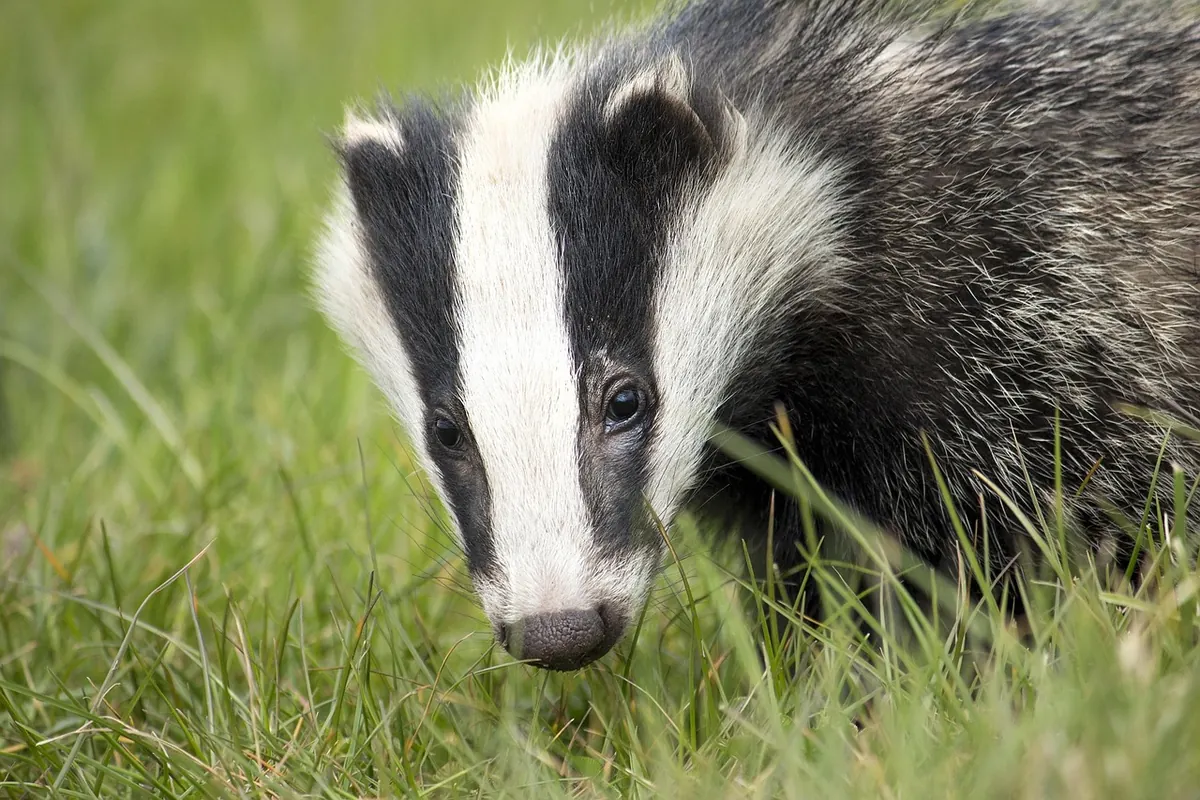
Photo: andyballard / Pixabay

You Might Also Like
A practical, humane guide to fencing, gates, buried mesh and non-harmful deterrents that protect your garden boundary while respecting protected badgers.
A practical guide to watching badgers responsibly at dusk and dawn, covering wind direction, red light, respectful distance and leaving no trace.